RCID Climate Justice & GESI Projects
Climate shocks hit the most vulnerable people hardest: female-headed households, children, older people and persons with disabilities. At RCID, Climate Justice and Gender Equity & Social Inclusion (GESI) guide our environmental diagnostics, disaster risk modeling and landscape restoration work. We combine scientific spatial mapping with community-centered approaches so that no one is left behind in Rwanda's green growth transition.
Evidence-Based Vulnerability Profiling
Combining hazard exposure maps with our Contextualized Vulnerability Index (CoVI) to identify local social and economic risks.
Inclusive Governance & Rights-Based Action
Making sure women, youth and marginalized community members lead local disaster committees and natural resource governance.
Equitable Adaptation Infrastructure
Designing gender-responsive water harvesting, resilient agriculture and early warning systems for vulnerable households.
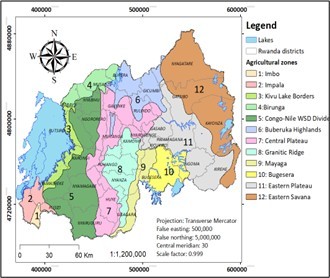
Disaster Risk Assessment and Hazard Hotspot Mapping: Protecting Rwanda's Most Vulnerable Communities from Climate Hazards
From September 2025 to February 2026, RCID supported the Government of Rwanda through the Ministry in charge of Emergency Management (MINEMA), UNDP and other partners. Together they carried out a comprehensive disaster risk assessment and hazard hotspot mapping. The work covered 139 high-risk hotspots in all 30 districts to find the areas most exposed to floods, landslides, storms and droughts. It is aligned with Rwanda's National Adaptation Plan (NAP), the Second National Strategy for Transformation (NST2), Rwanda's Nationally Determined Contributions (NDCs) and the Sendai Framework for Disaster Risk Reduction, as well as the African Risk Capacity.
RCID mapped 58 landslide hotspots, 52 flood hotspots, 21 hotspots for storms (strong winds, heavy rainfall and thunderstorms) and 8 drought hotspots. The team used advanced hazard mapping tools, field assessments and a survey of 542 households living in high-risk areas. The survey showed who is most at risk: 16.6% of people in these areas live with a disability, and the child dependency rate is 16.1%. These findings put persons with disabilities, children, women and older people at the center of the plans, so that early warning and evacuation systems reach everyone.
RCID also held consultations with local leaders, communities and government institutions to test and enrich the findings. The team reviewed existing disaster risk reduction and climate adaptation policies to find gaps. It then recommended nature-based solutions and stronger early warning, preparedness, response and recovery systems. The goal is a Rwanda where the people who suffer most from climate disasters are the best protected against them.
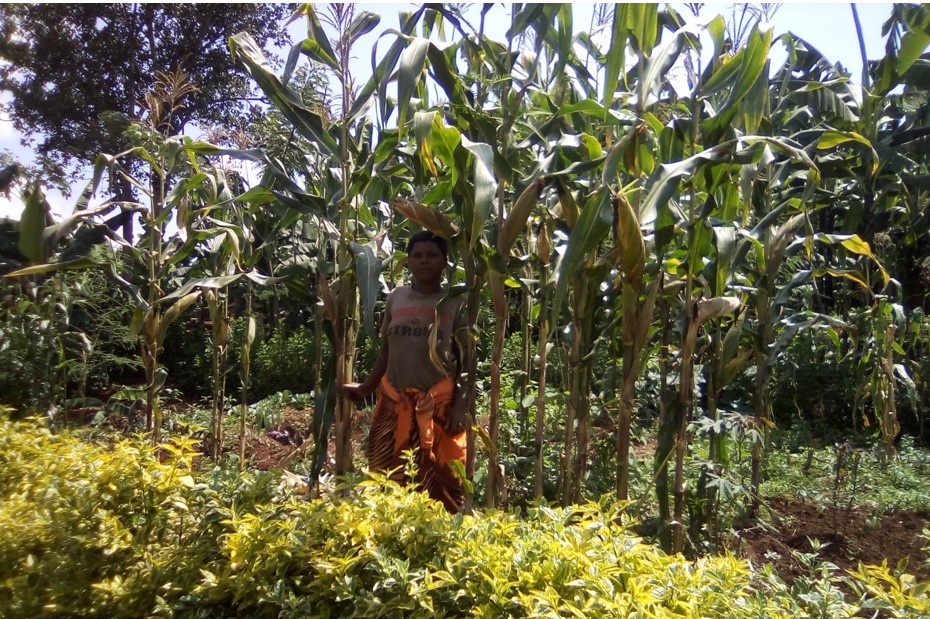
Baseline Study for the KOICA Ultra-Poor Graduation Project: Building Resilience for Women-Headed Households in Rutsiro District
From August to November 2021, RCID conducted the baseline study for the KOICA Ultra-Poor Graduation (UPG) Project, known as "KOICA III." World Vision Rwanda implements the project under the Tunga Cluster in Gihango and Mushubati sectors of Rutsiro District, Western Province. It targets women-headed households living in extreme poverty. These families are often among the hardest hit when climate shocks damage harvests and incomes. The project aims to lift them out of extreme poverty by improving food security, strengthening their livelihoods and promoting their inclusion in community life.
RCID gathered evidence to guide project planning and to measure its impact over time. The study assessed household food consumption (Food Consumption Score), financial literacy and child malnutrition among children under five. It also looked at community knowledge, attitudes and practices that affect how well services reach vulnerable women and their families. These findings helped shape the productive asset transfers, so that support matches each household's real needs and helps it withstand future shocks.
The baseline set clear starting points for the project's outcome and output indicators. This makes it possible to track progress and measure results as the project moves forward. The findings point decision-makers to the most promising approaches and to the ones that need rethinking. Above all, the study helps make sure that the poorest women-headed households are not left behind and can build stable, resilient lives.
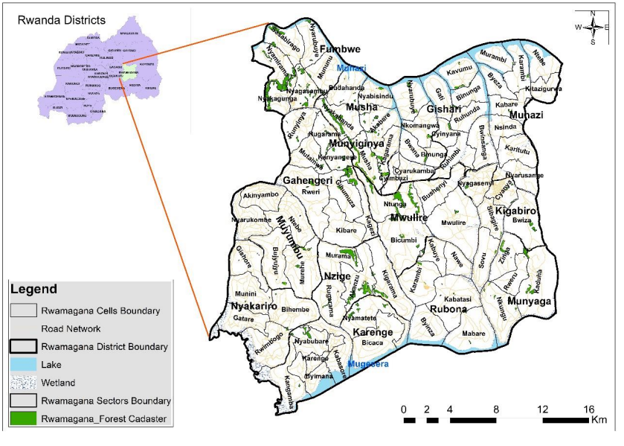
Feasibility Study on Sustainable Land Use for Community Climate Resilience in Rwamagana District
RCID conducted this feasibility study with the Rwanda Consumer's Rights Protection Organization (ADECOR) and Rwamagana District. It covered more than 400 households across 8 sectors, where soil erosion, land degradation and unreliable rainfall threaten farming and family incomes. The study looked for practical, community-driven land restoration solutions that help rural families adapt to climate change. Throughout the work, RCID engaged 20 community leaders and district stakeholders so that local people helped shape the solutions.
RCID prepared an Environmental and Social Impact Assessment (ESIA), a Gender Equality and Social Inclusion (GESI) analysis and an Environmental and Social Management Plan (ESMP). Together, these set out sustainable land use options such as agroforestry, erosion control and water harvesting technologies. The GESI analysis showed how these solutions could ease the daily burden on rural women, who spend long hours collecting water. It also showed how women, youth and vulnerable groups could take part in decisions and share fairly in the benefits.
A key result was a full project proposal submitted to the Rwanda Green Fund (FONERWA). The proposal included gender-responsive strategies and recommendations for community governance. These help make sure that women and vulnerable households benefit equally from investment in climate resilience. The study gives Rwamagana District a clear, evidence-based plan to restore its land and help its most vulnerable families withstand climate change.
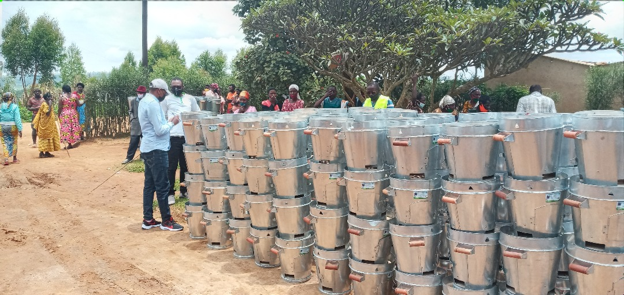
Evaluation of the Nyungwe Biodiversity Protection and Resilient Communities Project: Clean Cooking for People and Forest
Trócaire Rwanda carried out a community-led conservation and climate resilience project in Nyamagabe and Nyaruguru districts, on the edge of Nyungwe National Park, with funding from Jersey Overseas Aid (JOA). Nyungwe is one of East Africa's most important rainforests for biodiversity. Pressure from farming and firewood collection threatens it. The project aimed to protect the forest while improving the lives of poor farming families who depend on it.
The project promoted agroecological farming and gave low-income families improved, energy-saving wood and charcoal stoves. These went to rural sectors such as Muganza, Munini and Rusenge. The stoves reduce the amount of firewood families need to collect from the forest and lower indoor smoke pollution. This matters most for women and children, who usually collect firewood, cook and breathe the smoke. By cutting this burden, the project supported both forest protection and the health and wellbeing of vulnerable households.
RCID conducted the Mid-Term and Endline Evaluation of the project. The team surveyed target households and beneficiary groups to measure how widely families adopted the stoves. It also measured how much less firewood they used, how their household energy spending changed and whether indoor air quality improved. RCID then delivered a summary of results with evidence-based recommendations. These help Trócaire and its partners sustain the gains and make sure that protecting Nyungwe also benefits the communities living around it.
RCID continues to partner with government ministries, international donors and community organizations to build a climate-resilient Rwanda where gender equity and social justice drive sustainable development.